

Discussion of recent data on Burning Man attendance trends, including a New York Post article and Black Rock City census figures showing a decline in younger participants and a rise in attendees in their forties and fifties. The conversation covers historical context from past events, personal experiences at the festival, and comparisons to other gatherings.
Additional analysis explores organizational challenges, succession planning, and broader cultural shifts affecting participation. The episode also touches on related events and movements that have evolved over time.
Episode Transcript
Malcolm Collins:
Hello, Simone. I’m excited to be here with you today. You, as somebody who had gone to Burning Man in the past, we’re gonna be going over an article and some new statistics. and the article is titled, Burning Man has become a wrinkled sausage fest for aging millennial men data shows. And the data is extreme. This article is, by the way, from the New York Post, and we’ll be going through it, commenting on it, and bringing in additional data. Right. Burning Man, the nine day celebration of art, music, and anarchistic hijinks in the Nevada Desert has been steadily shrinking since its 2019 peak. But the share of people in their forties and fifties is on the rise, data shows. The number of free loving revelers flocking to the playa I love they put it in quotation marks like you got
Simone Collins:
Oh, New York Post. Come on.
Malcolm Collins:
Where each year a city is built on bare sand and razed after a week of drug fueled closing optional partying. No. One of the, posts I found, on Twitter, because I was looking at analysis on this, was a guy who had regularly gone to Burning Man who said the number of attractive naked women has dropped 95% over
Simone Collins:
the years. 95. That’s a statistic for you. No. No.
Malcolm Collins:
It dipped to about 70,000 last year after peaking at close to 80,000 according to last year’s census of Black Rock City, the ad hoc municipality that hosts the burn. But the oldies are proving that they have more stamina than the kids in 2014. Oh. Burners under 30 made up thirty percent of the playa. The number plunged by more than half to 14 in 2025.
Simone Collins:
Oh my god. That’s actually quite That’s remarkable. Yeah. That’s
Malcolm Collins:
Oh, and and that’s an old age. We’re not talking under, like, 20 or 25. Under 30. 30 is less than 14% now.
Simone Collins:
That’s really different from how I remember it.
Malcolm Collins:
When you went, you said it was would be the majority. Right?
Simone Collins:
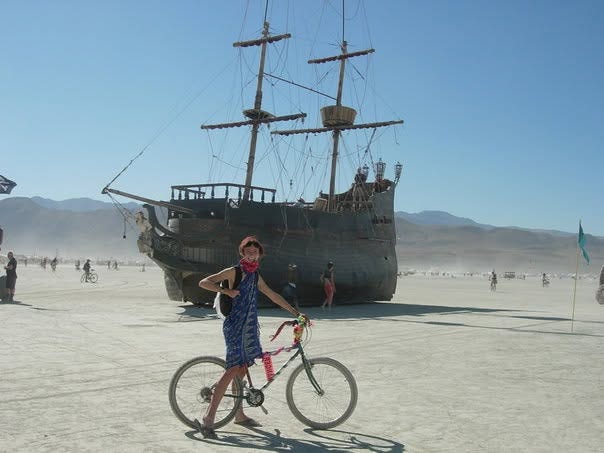
Yeah. I I was very so as a young lady who grew up in the San Francisco Bay Area, I was accustomed to events where people were naked, and I was also very accustomed to all the people who were naked, obviously, being boomers, being my parents’ age, and being really gross looking. And then what really shocked me about Burning Man, which I attended, I think, as a junior in high school in 2005, was that the naked people were actually hot. Like, I I wasn’t, repulsed when I saw them. I was like, okay. Like, these are attractive naked people. I thought only ugly people walked around naked because that’s kind of the normal San Francisco Bay Area.
[Correction—it was 2006]
Malcolm Collins:
It is the normal San Francisco Bay White people. Who lived in
Simone Collins:
San Francisco. About, you know, like, being naked. They actually had one of the things that happened at Burning Man was a thing called critical tits. I think it happened outside Burning Man too. But there there was this thing where just, like, all the women would ride their bikes with their shirts off in big flocks. It was, like, it was a one once every time, but, like, it was delightful. Yeah. So many things like that. But I guess now, it’d just be like saggy flapjacks on a bunch of bikes instead.
Malcolm Collins:
Did you ever walk around Burning Man naked? Or
Simone Collins:
I did not take my clothes off. No. I did not take my clothes
Malcolm Collins:
so it’s
Simone Collins:
I was I was underage. That probably I mean, I there were, like, a bunch of naked feral children running around, but, like, I I guess I guess it would have been fine. I Our
Malcolm Collins:
house is full of naked feral children
Simone Collins:
to Have you tried to get yes. You have. Look. Getting our children dressed is harder than dressing a a rabid raccoon. They will scratch. They will hiss. They will bite. I’m not dealing with that. It’s like, if I don’t have to. Jeez. I feel like if we could just spray paint clothing on them, we would. Just anyway. Wow. That’s what we’ll
Malcolm Collins:
be doing going forward. So that is that is the future. Spray paint clothing on in the morning. You have a you have a machine that, like, grabs your kids. They’re squirming and spray paint
Simone Collins:
them down. Genuinely. Genuinely. I should actually, like, try to watch YouTube channels of pet influencers who, like, make their poor over medicated animals wear clothing.
Malcolm Collins:
So, like, we’ve got, like, a dog washing sink. We should be using that for the kids. I had then I’d have to
Simone Collins:
lift them into it. See, I can just kind of push them into the bath after I drag them because I literally you know what? Every time with Titan, I have to drag her. She’s smiling the whole way. Good. She loved it.
Malcolm Collins:
A little too much.
Speaker 3:
I’m gonna be honest.
Simone Collins:
A little too much. Catch me, daddy. Catch me. It’s not good. It’s not good, Titan. Anyway yeah. So wow. So it’s older now. Because it it was notably young, and there were a lot of hot people there when I when I went. Yeah. And I yeah. It’s yeah.
Malcolm Collins:
And they were naked. Apparently, there’s just not many topless women at all anymore.
Simone Collins:
That is also shocking. I mean, now to be clear, like, critical tits wouldn’t have been a thing at Burning Man if women were always walking around topless. So it wasn’t, like perpetual nudity wasn’t so much a thing. One of the reasons being that you’re in a pretty extreme weather environment. Like, you’re you have to wear goggles and you have to have a mask with you constantly because the dust storms come, and you actually need to cover, like, all the things or else I mean, dust is gonna get everywhere anyway. But, also, it gets super cold at night. You can’t walk around naked because it’s, like, 40 degrees and windy and cold. So, you know, as you know from being in that troubled team camp on the desert, like, it gets super freaking cold at night, and you you need to try to survive.
Malcolm Collins:
So to continue Yes. Adriel Knight 41 attended in 2023 when a rainstorm flooded camps and turned the exit routes into an impassable muddy mess. Famous. She recalls one young influencer saying, this is not like Coachella at all.
Simone Collins:
First off, who’s going to Coachella? Second off, who’s going to and that was that like, there’s a I
Malcolm Collins:
had classmates. When I was getting my MBA at Stanford business school Of course. There was, like, a big group of them that went to Coachella, and I were are you sizable enough. And I was like, what are you fuckers doing?
Simone Collins:
I know. It seems so insanely miserable. Insanely miserable. I mean, I would say, actually, burning burning man is legit cool. very, very like, I wouldn’t go again, but I’m glad I went. However, Coachella? Absolutely not. No. No way at all. but that year is is quite famous. Nothing like this had happened at Burning Man before. And what happens with the Playa, this desert, is when it rains hard, and it rained hard for several days. You cannot move a car out of it. You they there were there were pregnant people there. There were sick people there. There were people who couldn’t walk, who who were separated from their meds. It was a genuine serious emergency. And when this played out, you had the government saying, like, hey. Should we send in a rescue crew? And the Burning Man organization being, oh my god. Please don’t. Like, we can’t have this on our record, basically. I actually think they made a bad call. Not So
Malcolm Collins:
they ended up dying,
Simone Collins:
by the way. Someone died in that?
Malcolm Collins:
Of drugs, though.
Simone Collins:
Oh, well, yeah. It was oh, sorry. Yeah. I do remember that. Yeah. But that’s that doesn’t count, because, you know, that happens. But that was a really, really bad year. It they had such a rough run of it after 2019 that it makes sense why there are fewer people because it’s just kind of scary. But that
Malcolm Collins:
was in 2023.
Simone Collins:
That was in 2023. Yeah.
Malcolm Collins:
And it that year, apparently, like, Chris Rock and Diplo I don’t know who Diplo is. They ended up having to, like, walk five, six miles in the mud to, like, the road and and hitchhike out.
Simone Collins:
Yeah. No. Some people escaped that way, but then the other burners, like, shamed them for it. You know, they’re like, coward. It was just just horrible, like, the way it all played out. And this is also the
Malcolm Collins:
Kimball Musk was there that year.
Simone Collins:
He’s yeah. He’s I didn’t realize how how much he got into Burning Man until I saw the man must burn, a documentary about Burning Man on HBO, which has multiple episodes. It’s a really good documentary. But then I see this, like, weird guy talking who, like, looks sort of familiar, and then I’m like, oh my god. And it just turns out he’s trying to get involved in, like, the governance of it, the succession planning with the organization, like, trying to get people together. And it very much actually ties in with your theme of today, which is this organization needs succession planning. This organization Well, I mean, it’s the same
Malcolm Collins:
with the Behemothian Grove. Like, the Behemothian Grove is falling apart because everyone’s super old now. Like, there are things that are scenes for certain periods. And if you can’t accept that scenes transition, then you end up wasting your time trying to capture legacy organizations that don’t matter anymore. Mhmm. So if I’m gonna give an example of, like I think my dad handled this very maturely. So my dad was one of the people who made an organization. Now if you are into, like, edgy intellectualism in the eighties and, like, the dominant organizations in that, he was one of the key figures that brought the rise of an organization called the
Simone Collins:
the Santa Fe Institute.
Malcolm Collins:
was, like, the proto effect of altruists. Right? Mhmm. It was, they they focus on, like, complex what was it? Complexity research?
Simone Collins:
No. No. No. Oh, sorry. No. You’re thinking about the Santa Fe Institute. He’s also involved in Aspen.
Malcolm Collins:
But Oh, yeah. Yeah. Sorry. Sorry. Sorry.
Simone Collins:
Sorry. Say dad. He’s he’s prolific. He’s prolific. The Santa Fe Institute, not the Santa Institute. They are big specialists in complexity studies. I think at one point, Jeffrey Epstein donated to them.
Malcolm Collins:
He was he was one of their longest standing board members,
Simone Collins:
and he was the guy Your dad was, not Epstein.
Malcolm Collins:
Yeah. My dad was is my dad. And he was the guy who managed the period in which they grew dramatically. Mhmm. And they became, like, a major institution in terms of influencing edgy intellectual thought from,
Simone Collins:
like Absolutely.
Malcolm Collins:
I’d say, like, late eighties to, like, up to the, like, the mid nineties. Right? Mhmm. And they’re still relevant. Like, obviously, Epstein wanted to to buddy up with them because they they hold a lot of sway. Right?
Simone Collins:
Yeah. Like, genuinely very prestigious scientists, intellectuals, etcetera, have been involved with them. They do research that people would call interesting. I personally can’t stand it because complexity research. Like, it all just comes down to, like, I can’t tell how much of its intellectual gatekeeping that doesn’t actually amount to anything. And the problem with complexity research is like, we can’t do anything about it because it’s too complicated. And I’m like, you know what?
Malcolm Collins:
So so, by the way, if if if you’re wondering what they are like in a character who was modeled after this intellectual scene Okay. If you’ve ever seen the original Jurassic Park, Ian Malcolm is modeled after the Santa Fe Institute people in their research.
Simone Collins:
He’s a walking Santa Fe Institute researcher.
Speaker 5:
ot clear on chaos. Oh, oh, it it it simply deals with predictability and complex systems. The shorthand is the the butterfly effect. A butterfly can flap its wings and be king, and Central Park can get rain instead of sunshine. Why? And then I go too fast. I go too fast. I did a flyby. No. Give me give me that big glass of water. We’re gonna conduct an experiment. It should be still. The car’s bouncing up and down, but that’s okay. It’s just an example. Now then put your hand flat like a hieroglyphic. Let’s say a drop of water falls in your hand. Okay. Right? Okay. Now freeze your hand. Freeze your hand.
Speaker 3:
And you’ll go to
Malcolm Collins:
these lectures, and they’ll do, like, two hours of math on, like, a water droplets path or something like that.
Simone Collins:
Yeah. You know? Yeah. Yeah. And he he’s up yeah. It’s absolute like, the institute that’s like, well, but should we? Should we make dinosaurs? And I’m like, yes. We should. Yes. We should. Go colossal. Come on. Like, let’s do it. Bring it. Bring it. They were they
Malcolm Collins:
were the bath guys of, like, the late eighties. It was like their leather jackets. Like, like, the risk girls. Yes. But he, unlike Kimball, trying to so he took an organization that was really nothing and then worked with them as they became a dominant intellectual player.
Simone Collins:
Get it on the ground floor when it’s still messy.
Malcolm Collins:
Yeah. Whereas Kimball tried to capture an organization that was honestly in or past its prime when he became relevant within it. Yeah. And is trying to capture the prestige that it already had built. Whereas my dad gracefully stepped out of the organization. Mhmm. Being like, no. This is stupid.
Simone Collins:
I I think he would disagree with that that final statement, but I do think it it’s I think his argument, and this is really the best smartest philosophy, is you step in when you can make a difference. And when an organization gets too old and too messy to functionally change or be influenced by you in a positive way, you gotta step back because you’re not gonna have it. You’re wasting your time. It’s not gonna change. It’s too ossified. It’s cancerous. You gotta drop it like
Malcolm Collins:
Well, I mean, in speaking of cool new organizations and movements, this faction of the new right feels like that for our generation. Totally. I I really believe that, you know, twenty, thirty years, this will be the burning man of our generation. All the the aging VTubers with their ageless models, all the you know, You know, I mean, I I think there’s this is where I see the people going who are just like, okay. But, yeah, what’s true? And, like, let’s be edgy and have fun with it. Right? And I don’t see any other centers of power where that is really happening in a meaningful context. For a little bit, you had it with, like, the what was it? The paradox that what were they called again? The that that stupid magazine. Oh,
Simone Collins:
no. You’re thinking about Praxis the city state, but you’re talking about Palladium.
Malcolm Collins:
Palladium. Palladium Magazine. No. I was thinking of Palladium. I just forgot the name. They held, like, parties, and they had, like, a bit of a scene going on, but that that’s not as relevant anymore.
Simone Collins:
They did have a scene. They did have a scene.
Malcolm Collins:
No. They absolutely had a scene, but that was, like, the generation before us. And that it was, like, five, six years ago or something like that. Right? Most of their key figures have moved on. But there really isn’t anything Palladium would have been the only competitor to this ecosystem, and and and it’s mostly retired at this point, which is fascinating. I I mean, Praxis could be the same to the the the city state movement, but that’s you know, while they’re still chugging along, they don’t hold the parties. They don’t hold the podcast. They don’t hold the, you know, anything like that.
Simone Collins:
Yeah. They used to try, I think, and have regular events in New York, but a lot of things have changed. So who knows what’s going on?
Malcolm Collins:
And and we say this not as outsiders. We’ve been on the Praxis podcast. We’ve written for Palladium. Right? Like, we we’ve been to their parties. Yeah.
Simone Collins:
We we and we yeah. We want them to succeed. We want this. We Yeah. We also know that what they’re doing is very hard to do. But, yeah, definitely, what’s happening Burning Man is an organization that started a very, very long time ago. And one thing that’s revealed in the man must burn in that documentary, it really centers around this core problem. Because the documentary team primarily follows the organization of Burning Man and its CEO who started out as the girlfriend as the of the original man who started Burning Man. And she just sort of ended up over time as the CEO for this organization. And throughout the documentary, there’s this one point at which I think kind of led by Kimball. This contingent is like, look. She can’t stay like, we need we need new blood. Like she’s just kind of like, whatever. Like, I’m just gonna keep going. I don’t know who wants my job. And, like, don’t know. She’s she’s kinda fed up with her position, but she cares about the organization, and she’s gonna keep doing it. And kind of like the other issue with Burning Man as, as the thing it has become is it kind of no one wants that job. No one wants to be responsible for a self forming city and all of the, like, zoning nonsense and the porta potties, and you have to go through, and police people and tell people to go away.
Malcolm Collins:
Oh, yeah. And it’s it’s it’s both extremely expensive now, and the expenses of the average ticket don’t cover the cost.
Simone Collins:
Mhmm. So you have this organization that’s trying to survive, trying to maintain the the finances sufficient to do it. And of all the types of people who love Burning Man are exactly the types of people who don’t wanna be, like, bureaucratic admins. And so as much as people are like, we need succession planning. We need something different. Can no one wants to do it. and so you have this incredibly old, not in a bad I mean, like, they’re also experienced. They they care a lot about this, but they are very old group of people who are still doing this. And I would say that, look, the fact that I went in 2005, which is twenty one years ago oh my god.
Malcolm Collins:
I’m old. Twenty one years ago. If somebody had been born at that burn.
Simone Collins:
No. Keep in mind, though. Yeah. They they would be 21 years old. They do be of drinking age. Oh, yeah. They’d be turning yeah. That is really But
Malcolm Collins:
this is how old you are.
Simone Collins:
No. But the point is, it wasn’t just that. Right? I’m old. Right? But, like, I went that that year, and who did I go with but my high school friend and her parents? It was her parents who were burners. I went because they wanted to take their daughter for the first time, and they wanted their daughter to have a kid companion at the event. And that is the thing. It’s like to me and to my peers, Burning Man wasn’t the thing you go to. It was the thing our parents go to, and that was in freaking 2005. So you have to understand just the profundity of the geriatric nature of Burning Man right now. When for me teenager, It’s a thing that your parents go to. It’s a thing in 2005 that boomers went to. And now twenty years have passed. So now it’s it’s what, like, a barely ambulatory elderly people go to. Like, I just
Malcolm Collins:
Somebody described it as, like, a retirement home in the desert now. No.
Simone Collins:
Which is so sad. Because, also, like, a lot of really sad things are happening this year in particular because of the expense of going as well. For example, one of the best things about Burning Man has been the Thunderdome put on by the death guild. Because the way that Burning Man works is the coolest features are put on by people who attend Burning Man and bring with them huge amounts. And this is a a great expense, you know, a hun like, sometimes hundreds of thousands of dollars, at least tens of thousands of dollars Yeah. To bring out art exhibits and and events and, like, whole venues and, like, party buses that play amazing music and have famous DJs come and all these things. And a lot of the people funding this are people like Kimball Musk, are people who are big Silicon Valley post exit people who you would know who are quite famous. There’s yeah. Like, the the odds of you running into a current or former, like, tech CEO at Burning Man are incredibly high because, also, these are the people who can afford to put things on and also attend. But, anyway, the death guild’s contribution to burning man was this giant geodesic dome that sort of remade Road Warriors thunderdome where you could get attached to, like, a bungee cord system and then just, like, have at it.
Malcolm Collins:
Did you did you go in it?
Simone Collins:
Did you I did not. No. No. I was a little girl. I was just fascinated by it, but I really loved it. And there was like, the one of the the primary leaders of the death guild is this woman who sings, like, techno operas, like, the fifth element, like, that kind of thing.
Malcolm Collins:
Okay. Okay.
Simone Collins:
And so she would, like she’d sing at the beginning, and it was just this whole big thing. And everyone’s, like, climbing up onto the dome, like, screaming as
Malcolm Collins:
we go. Reminds me of our kids in the dome in the backyard.
Simone Collins:
Can we No.
Malcolm Collins:
Like, literally
Simone Collins:
every day is the Thunderdome with the death guild and burning man at our house. I swear. We just, like, add add lasers, and we have burning. Here’s the make the nudity, the the trippy moments, the thunder dome. Give them some things to hit each other with.
Malcolm Collins:
That’s what
Simone Collins:
I need in in the dome. Yeah. Actually, I we really need that. They had, like, I should just yeah. I should just take a screenshot of what they have, and we’ll just rebuild it because our kids would freaking
Malcolm Collins:
Yeah. Get, like, a bouncy thing. Get them some, like, sticks to hit each other.
Simone Collins:
Yeah. Because you you’re fighting with, like, nonlethal sticks in the Thunderdome. Burning Man also, I would say, over the years became a lot less intense. For example, when I went, one of the most awkward moments of Burning Man and perhaps embarrassing moments of my life was we were looking for this one camp that was legendary where they would brand people. The thing you’re supposed to do at Burning Man is even if you’re a guest, even if you’re not putting on one of these tens of thousands of dollars, like, art exhibits or whatever, like, you should bring a gift. And one camp was famous for just having, like, active branding irons where you could just get branded, like, on your butt forever.
Malcolm Collins:
Did you
Simone Collins:
want that to happen? I well, I wanted to find the camp. Right? And we we got there really early because our parents had to set up their own art exhibit. They’re they’re both artists by trade, really.
Malcolm Collins:
She does not have a branding on her butt, people. I would I would know at
Simone Collins:
this point. You would know. and so we get to the camp, and no one’s there. so we just had to talk with the people running it directly. And they I think just like that year or the year before, had switched from doing brands for liability reasons to doing stamps. And they were like, well, do you want us to stamp your butts? And we’re like, well, like, we didn’t wanna be rude. And so, yeah, we had these, like, middle aged men, like and we were pulling down our pants, they were stamping our butts. And I was like, I don’t feel comfortable with this. Because then he decided to blow on it to dry off the ink. And I’m like, I don’t think I like this. I think we should go now.
Malcolm Collins:
Very creepy. Hold on. So what happened to the what happened to the Thunderdome?
Simone Collins:
The so the Thunder sorry. Right. The death guild decided this year they couldn’t afford to go, that it was just too expensive. And so everyone going this year is deprived of the Thunderdome. And, look, they’ve been through a lot. In 2020, Burning Man was canceled formally, but people still went, including Kimball Musk and his contingent. And the people who did show up actually really had a good time because it was just, like, ardent, real, like, we’re just gonna do this even though it’s illegal renegade burners instead of having an actual man to burn because, you know, the whole setup wasn’t there. And this is, of course, the culmination of this event that is Burning Man. A giant wooden man is burned, everyone and gets really excited about it. And it’s like, oh, yay. The man is burning. And then the day after that, you burn the temple, which is a place where people bring all of their grievances and sorrow, and and then the temple burns.
Malcolm Collins:
It’s like really sad scene in the abortion article.
Simone Collins:
Yeah. Actually, yes. That’s right. Yes. Romy took, yes, something something about her lost her lost baby intentionally lost baby to the to, yes, to the temple. And then it burned, and it’s supposed to help her mentally, but I don’t think it really. Maybe it did. I hope it brought her closure. But, anyway, instead of having a man, they had this really cool drone display. Like, I think they made a man out of a drone swarm, which is legit cool. So Yeah.
Malcolm Collins:
Look Oh, it’s made it through. That period. Right? Like, this was a while ago when drones
Simone Collins:
were 20 when, like, this was extremely new technology. And that’s always been a thing at Burning Man. It’s it’s incredibly high-tech meets complete off the grid nature.
Malcolm Collins:
But here’s what I don’t understand. Before we go further with the article, is, like, how like, Kimball Musk, my god. Man, you have the attention on you and likely the wealth to do something meaningful with your life other than seek status among burners. Right? Like That’s true.
Simone Collins:
He could just make a whole new burning man, that would be cooler and better.
Malcolm Collins:
And there was cooler burning man even when Burning Man was happening.
Simone Collins:
So Yeah. What happened to Ephemera? Do you have Yes.
Malcolm Collins:
So Ephemera. I gotta talk about Ephemera before I move forward. Yeah.
Simone Collins:
Tell me.
Malcolm Collins:
Ephemera was, like, the circles that I was in because I was in the edgy and
Simone Collins:
Yeah. They’re like, ugh. Don’t go to Burning Man. Go to Ephemera.
Malcolm Collins:
Oh, and it genuinely sounded so much more fun than Burning Man. So Not to me. Jesus Christ. What Ephemera was is everyone who was going would buy something that floated, like a floating platform or a boat or, you know, something. And you’d all go into this, like, big lake at this one location, and then they tied everything together to create this, like, giant network of floating platforms. Look.
Simone Collins:
It was the water world to burning man’s road warrior.
Malcolm Collins:
If if burning man is, like, hot and dry, like, why not have a cool water thing that you can
Simone Collins:
jump in? Not just get gangrene because your feet are so soggy because your boat keeps leaking. That just sounds look . The the dust wasn’t as bad as ever. It just gives you anime hair. Everyone’s got anime hair. It looks fantastic. It’s it’s it’s it was great. You’re like a chinchilla. You bathe in it. Ephemera did not sound good. But, yes, absolutely, people have tried to create other cool gatherings and perhaps have succeeded. And perhaps there are amazing ones happening, and the only reason why they’re amazing is because we don’t know about them. That’s kind of the the feature.
Malcolm Collins:
Oh, gosh. So I decided to look up Ephemera. It’s got a Wikipedia article. Oh. And it goes, in the first year, approximately two thirds of Ephemera’s 100 plus attendees were sea steaders. So that was the community at
Simone Collins:
Cape Yes.
Malcolm Collins:
Of course. In 2012, there are approximately 300 attendees, a quarter of which were SeaSteaders. And by 2015, there are estimated 500 attendees, and there isn’t any any note of a rundown of the event.
Simone Collins:
You think there’d be pictures or something.
Malcolm Collins:
Right? Tons of pictures.
Simone Collins:
I’m what are what are you searching? Because there’s a there’s a historical Oh, it looks cool. Okay. Okay. Yeah. It’s it’s a little oh, I love the yacht zone. There’s like a there’s the rich part of town, yacht club area, and then there’s, like, the poor people part of town. And I see an outrigger Yeah. The
Malcolm Collins:
yacht zone. We’re the three yachts. Didn’t even notice that.
Simone Collins:
And they’re
Malcolm Collins:
like, this club, this yacht zone, and then there’s, like, this weird old tanker.
Simone Collins:
Yeah. Then there’s, the yeah. Yeah. Then there’s then there’s the tanker ghetto, and then there’s, like, everyone else. That’s so cute. I love that so much, the yacht the yacht people. Okay. I’m seeing guys hanging out in, like, a floating kiddie pool. Someone tried to set up some art that’s floating on the oh, there’s, a floating platform intense. This was this was Ephemera was hosted in, like, this delta area around California that has sort of a bunch of islands and then just water. I don’t know how they did the permitting for it, but well, that’s lovely. Yeah. It’s it’s around Sacramento. I it looks like nothing happened after 2021, though.
Malcolm Collins:
But it’s still happening every year. I checked AI. Yeah.
Simone Collins:
Okay. Okay.
Malcolm Collins:
I’m just saying I prefer to be on water
Simone Collins:
than Yeah. You can go. You can go. You can go. Look. I wouldn’t go back to Burning Man now With the WKids. To continue. I wouldn’t go back.
Malcolm Collins:
It’s really out of everyone’s comfort zone even if you have a comfy camp, and maybe millennials and Gen Xers have a higher tolerance for discomfort, Knight told the post. Men have also historically outnumbered women, and that trend still holds strong with males making up 56% of the burners last year.
Simone Collins:
And that’s not that much more. Yeah. Come on.
Malcolm Collins:
It was an oasis of men. I don’t mind, Knight said, of her experience. Although she said the gender gap wasn’t significantly noticeable to her. But as those men arrived with camera phones, the number of women partying topless has dropped, reported veteran burners. When did nudity disappear? Yes. There were some swinging hogs. I saw you. But I would say that the amount of female toplessness decreased 95% from the last time I was there, lamented one burner of the r burning man subreddit who attended the recent festival after a ten year hiatus. The Burns famous Orgy Dome has strict regulations to ward away any horny pickup artists, including a couples and morsems entry policy. Orgy Dome? Oh my god.
Simone Collins:
Yeah. There there have been headlines this year of, like, the Orgy Dome blew over the previous year, but it’s coming back this year. Participants are being encouraged to use antibacterial body wipes. Just doesn’t sound very good.
Malcolm Collins:
So now, about half of burners make over a $100,000 a year compared to just over a quarter of that level in 2015. this is a rich old person saying, meanwhile, the festival has gotten more expensive to attend. It can be cost prohibitive, said Knight, who spent around a thousand dollars on supplies in preparation in 2023 on the top of the price. This year, that went up at $775 more than that. So almost double. In addition, Borners charged extra fees to drive a vehicle to Black Walk City. My first burn in 2005, I was 21, and I bought a ticket for $215. I spent I spent a thousand dollars for that year alone. It sucks the economy is pricing so many of the younger burners out,
Simone Collins:
he said. Yeah. Legitimately, who can afford to do that? And the travel outlook You can’t family or you’re relevant to
Malcolm Collins:
the future of human civilization? Yeah. Does Kimball Musk have kids?
Simone Collins:
That’s a good quest he must have kids.
Malcolm Collins:
Four children, three biological children, and a stepchild. He founded something called the kitchen. What is the kitchen? Like, they own a restaurant called Big Green in Austin. No. Is this a nonprofit? I can’t.
Simone Collins:
An vibrant neighborhood neighborhood bistro and bar serving globally inspired American cuisine.
Malcolm Collins:
But he he founded something with his wife, which I guess is good.
Simone Collins:
Oh, and then he tried to open a kitchen seven months ago in Boulder and then and read it. I had an aneurysm about it. And I was like, are we going to do anything about the kitchen? Kimball Musk is mentioned in the Epstein files. He clearly has some association. We need to bankrupt them. What is wrong with people?
Malcolm Collins:
I am so glad we became famous after Epstein was locked up
Speaker 3:
because he a 100% would have reached out to us. I don’t know.
Simone Collins:
Yeah. He even reached out to Chris Poole. Like yeah. This this guy. I would
Malcolm Collins:
have been like an island. Sure. Yeah. Let’s check it out.
Simone Collins:
You know, I hate island. You would have had to go by yourself. Yeah. Though, I mean yeah.
Malcolm Collins:
That would have looked better, Simone.
Simone Collins:
Oh, great.
Malcolm Collins:
That would have looked better, you be.
Simone Collins:
Oh god. You’re right. Yeah. You’d have to be messaging someone about antibiotics after. My lord. Okay. So How
Speaker 3:
do I convince my wife to take antibiotics? How does
Simone Collins:
Oh my god. Yeah. We we probably would’ve. Well, I mean, no. We if we knew that he was a
Malcolm Collins:
No. I’m, like, weirdly resistant to peer pressure. Like, we’ve hung out with, like, severely rich people at, like, drug parties and stuff like that, and I’m like Severely rich.
Simone Collins:
It’s
Malcolm Collins:
great. I’m like, no. No. Thank you.
Simone Collins:
No. Thank you. Yeah. We’re a little too square for all that.
Malcolm Collins:
We are very square here
Simone Collins:
and I.
Malcolm Collins:
People think that, like, we’re, like, out because we’re from the Silicon Valley ecosystem, and we were exposed to all of this, and this was normal for us. But throughout the entire pipeline of all of that, I was the squarrest mother you’ve ever think you
Simone Collins:
have to understand when you come from social sets like our parents who did all that stuff, That’s a boop it’s a parent thing. Your mom, like, was like, hey, Malcolm. Do you wanna smoke pot? And you’re like,
Malcolm Collins:
no. No. I mean, I did it with her, and I was like, dad, stupid.
Simone Collins:
Oh god. See, yeah, I wouldn’t like, my parents were always like, try this, try that, and I’m like
Malcolm Collins:
I only go with Jesus approved
Simone Collins:
Intoxicants. Okay.
Malcolm Collins:
Jesus approved intoxicants.
Simone Collins:
Someone needs to put those on, like, beer cans and bottles of wine. Jesus approved.
Malcolm Collins:
That’s what I’ll do. Jesus approved. Beautiful. Wine. Jesus approved.
Simone Collins:
Yeah. Bread fishing was fishes and wine, I guess, he was okay with.
Malcolm Collins:
No. I mean, out of all the major religions, would, like, Christianity is the most, like, pro alcohol religion that I’m aware of. Like, I don’t think Judaism doesn’t explicitly have any big alcohol miracles. That’s a that’s a thing. Like, alcohol miracles. Miracles.
Simone Collins:
You know? You know your religion is a drinking problem. Have multiple alcohol miracles. Oh god.
Malcolm Collins:
The the people who are like like, oh, well, you know, those Christians, they don’t drink. I’m like, well, they don’t they don’t they’re not really big into the bible, I guess. Because
Speaker 3:
the the Buddhism doesn’t have
Malcolm Collins:
multiple alcohol miracles. I I I even, like, the ancient Greeks had, like, specific gods for that stuff.
Simone Collins:
But, like This is true. This is true. But, actually, I I would say you you would have to argue that the Greeks didn’t value alcohol because they would always pour libations. Whereas the Christians mm-mm. No. You might slaughter an animal. You might spill blood. You didn’t spill alcohol.
Malcolm Collins:
But you would not spill your
Simone Collins:
alcohol. Expanded. We doubled the alk we we we we multiplied.
Malcolm Collins:
There are there every week, you have to drink your alcohol.
Simone Collins:
We do we do not waste Because that’s Christ’s blood.
Malcolm Collins:
Right? No. Mm-mm. But Yeah.
Simone Collins:
Yeah. They yeah. My my blood is alcohol. It’s it says we we we he could have chosen many things for that symbolism. Alright? And
Malcolm Collins:
He went straight for alcohol.
Simone Collins:
Went straight. God. Okay.
Malcolm Collins:
It’s true.
Simone Collins:
It’s true. It’s true. It’s true. It’s it is.
Malcolm Collins:
He could’ve he could’ve been like, hey. Can we? I’m about to do a big thing here. Can we change out the drink for something nonalcoholic?
Simone Collins:
Yeah. For something a little more sober. It’s kind of a difficult night for me going through some stuff.
Malcolm Collins:
It would be so fun for me that, like, the the morality police constantly go out there, and they go way, way to an anti biblical perspective but act like they’re being, like, super Christians. And it’s like, no. You’re not. You’re you’re ignoring the and it’s like some people get addicted. It’s like, suck a dick some people get addicted. Yeah. Then you fucking deal with that.
Simone Collins:
Get through it. I know. But, look, it’s there is no level of alcohol consumption that is healthy, except probably for your family.
Malcolm Collins:
I feel like when know in my family who drinks alcohol lives way longer than you.
Simone Collins:
I I I would say yeah. I just kind of yeah. I I have to look the other way when it comes to to you and your family. My family? Whole yeah. Your whole bloodline. It’s, like, so important. But, anyway, whatever. You’re different. You’re freakish. Hardly hardly human.
Malcolm Collins:
And we’re doing steak tonight?
Simone Collins:
Yes. We are. Steak and fries unless you want a steak.
Malcolm Collins:
Hooked us up with tickets to Burning Man this year.
Simone Collins:
It’s too late. It’s already happening. You have to understand. It is very, very difficult to get to Burning Man. I guess there are because I looked
Malcolm Collins:
at going once. I had to write an application to a camp.
Simone Collins:
Oh, yeah. Oh god. Well, you you could, I guess, theoretically go. I guess you were trying to go with a camp, but the you have
Malcolm Collins:
to couldn’t when I went, you couldn’t go without a camp. You first had to be accepted to a camp, and then you could go.
Simone Collins:
Okay. Wow. Things changed. But you have to drive a very, very long way to get in. I guess there’s a private some later people started taking in private airplanes, allegedly. I definitely saw people skydive in when I was there, but it is extremely difficult. If you’re driving from California, you need to, like, maybe spend a night in, Tahoe, and then you’re driving all day, long drives to the the desert. Really
Malcolm Collins:
not fun.
Simone Collins:
An extremely small town that is, like, maybe two hours away from like, guess, maybe closer. But that town cannot it has no, like, actual infrastructure. It has, like, one small shop. I barely any people live there, and then you get there. It it is so isolated. It’s so hard to get to. So it’s not just the expense of attending, not just the expense of hauling in all your own food, all your own water because there is no buying or selling at Burning Man. The only thing you can buy actually is, I think, water and ice for survival. So you have to bring everything in, and everything also that you take is probably going to get ruined. So you have to buy a bike that is just for Burning Man because that bike is going to get ruined by the dust. Everything’s gonna get ruined. And so that’s just I I just don’t understand how any normal person, especially any normal young person these days, could possibly go. And I bet that that small number, what, fifteen percent of people 30 who did go were probably going with their parents.
Malcolm Collins:
I’m gonna push back, and I think one of the reasons why so few young people go is not the reason the article says it’s not about finances. Mhmm. I think one of the reasons young people go is the demographic that found things like Burning Man entertaining just didn’t have many children. And they didn’t pass on this desire for this sort of, like, performative edginess to the next generation. That form of performative edginess. Like, obviously, you’ve got our form of performative edginess, but it’s, like, you know, intellectual out there online. We don’t need to go around and walk around naked and talk about our fucking chakras. Okay? But the burning man type, I think that type of human might just be going extinct.
Simone Collins:
Yeah. I think so. The burning man is definitely seen by those who identify as burners not as a thing you go and do for fun, but as a lifestyle. You’re spending your entire year planning for it. You’re associated with the community. It’s it’s a religion. It’s a surrogate religion. And and the the the burning man portion of it is just the pilgrimage portion of that religion. It is not it is just one facet of something much bigger than that. And I think the big part of it if you actually just look at it more practically from the perspective of a religion, this is a religion with a very low birth rate that is that is not adapting with the times. And one of the things
Malcolm Collins:
So a word of this are we were gonna say something?
Simone Collins:
Well, one of the other big things is that, actually, there was this period, and we all heard about it when young people were going to Burning Man. And it was like the new Coachella, and all these influencers were showing up, and they were taking pictures. But guess what happened when they went? They got shamed. They got ostracized. They got made fun of. This is even picked up on in the documentary on the Burning Man, like, the period between 2019 and, I don’t know, ‘20 We didn’t like young people. And so the one wave of people that was like, oh, this is pretty cool. Like, we’ll we’ll make we we can do this. We’ll go. Got shamed and kind of scared away from it, especially by, like, the the bad severe weather events and stuff. So I think they also flubbed it. It’s not just that. It’s it’s the fact that when people did try, at a different generation and in a different style because they are a different generation, their style was not allowed.
Malcolm Collins:
Yeah. But I think one thing that, like, I really wanna emphasize is in my generation, when I hung out with, like, the effective altruists and the singletarians and all of these groups that were, like, this sort of, like, elite intellectual, like, we’re gonna try, like, edgy things group. For any event or thing that you were going to do or apply to, it was incredibly hard to get in. There was, like, a 100 people for every one position. Today, every teenager I know who has an interest in these communities gets in. And it’s because people born with these sensibilities are just way lower a portion of the population than they were in my generation.
Simone Collins:
Mhmm.
Malcolm Collins:
And I think it’s the same with burners.
Simone Collins:
Mhmm. Yeah. Yeah. And you you do have to have a high tolerance for, like, just physical discomfort and and heavy socializing, which I think is is harder for people now post social media. We don’t hang out in person as much. So the idea of hanging out
Malcolm Collins:
Yeah. I mean, I’d like to go in there and purify it. Right? We got we got flamethrowers. Got We a little crusade going on. But you there is that.
Simone Collins:
There there’s all these there’s lots of flamethrowers.
Malcolm Collins:
But they’re not they’re not using them in the right way. No.
Simone Collins:
Yeah. It’s just a a marching band where all of the instruments are on fire, but also functional. It’s not not the way you would want, I guess. But, yeah, it’s
Malcolm Collins:
anyway. Drive actually. Like, if at the end, you just, like, drive into Burning Man was, like, an actual killdozer with, like, flameservers attached driving through the tents. Just like it would take it would take so long for anyone to be able to respond to that. You would be able to if you were just gonna go out.
Simone Collins:
Don’t do that. There are innocent people in these tents. Actually, one thing that did happen that really freaked me out, I think I can’t remember exactly what the details were, but it it won of the really early events. And this is why they had to build up all of these in this infrastructure and all the safety is that someone did get, like, crazy drunk, and they drove through some tents. And one of them, I think, had two kids in it or something. The kids ended up okay. It’s okay. Someone else died, but not the kids. Nothing bad could happen to kids. They were okay. But, like, still, it is and it is not a it’s it it can be a dangerous place. And they’ve actually had to do so much to make it safe, and that is also very difficult. Like, they have these rangers who are constantly going across the playa trying to find anyone who might be overdosing. All this stuff happens because people don’t know what they’re taking out there. Things go hard. So it’s it’s such a difficult and I I, again, I get why only old people are showing up now because, like, how are you gonna get young people to govern an event that involves being responsible for keeping all these people alive?
Malcolm Collins:
You just rather be a streamer. Like, if you’re going into this world, just be a streamer.
Simone Collins:
Well, I do think that there is a group of people that just wants to feel something.
Malcolm Collins:
Be a streamer.
Simone Collins:
No. No. It’s it’s not there is something different when you experience something physically. It’s it’s true. You can’t, like, have exactly the same experience. I disagree. Streaming is way more way more fun.
Malcolm Collins:
I think I think that’s boomer talk right there, experiences. What are you talking about?
Simone Collins:
Oh, look. I don’t want them. I I know that physical experiences are different, and I think that they’re worse. I do not like them anywhere near as much. So I’m not
Malcolm Collins:
Love you, Simone. I
Simone Collins:
love you too. I hope that people find the communities they need outside of Burning Man because it doesn’t look like
Malcolm Collins:
As they slowly go extinct.
Simone Collins:
It’s sad. It but
Malcolm Collins:
it’s cool
Simone Collins:
that it happened. I’m glad that it happened. You can’t sleep, and I don’t know what’s happening either. But, hopefully, steak and fries will bring you back to life. We will
Malcolm Collins:
Yeah. I’d like to try to go to bed early today.
Simone Collins:
Then I will prioritize stat instead of waiting to wrangle the kids in. They’re so resistant. But also, like, would you blame them when you could see our yard and how freaking pretty it is out there? Like, I can’t take them in. You know? They’re all I’m like
Malcolm Collins:
It’s so much prettier than my yards growing up even though they’re so much, like, bigger and supposedly nicer.
Simone Collins:
All manicured and stuff. Yeah. Whereas, like, if you walk around I I really need to just have people, like, sign a release form when they come to our house. Like, have you had your tetanus shots? Are you yeah. You know, do you need are you ready to screen for Lyme disease? Are you allergic to mosquito bites? Can you handle dog bites? Are you do you have antibiotics on hand in case, I don’t know, you, like, swallow some chicken poop while they fly around you? Anyway, the kids love it. And I I’ve just given up on telling them to come in. I just let them play outside. And when they’re ready to come in, they come in, and I can just see them out there playing. And I can’t. I can’t I can’t I can’t say no. I can’t.
Malcolm Collins:
Well, you’ve gotta get to sleep earlier yourself, sweetheart.
Simone Collins:
Well, that’s why we need to buy kid whips. I will buy a regular one. Colored. They’re Paw Patrol themed. Are they are they real? No. I I’m sure in China somewhere, there’s a I’m sure there’s a Paw Patrol themed whip. Hold on. Patrol themed whip. I’m just getting birthday cakes. Oh, because it’s it’s whipped cream. Oh, please, people. Come on. Come on. I’m sure. No. Streamers. Well, you know what? Where there’s a will, there’s a way.
Malcolm Collins:
Where there’s a whip, there’s a way.
Simone Collins:
Where there’s a I’m I swear to you. I mean, like, the thing is wanna know that song? Where there’s a whip, there’s a way?
Malcolm Collins:
You should look it up. It’s the from the original cartoon version of lord of the rings. they didn’t look like orcs in that. They looked like deformed hobbits.
Simone Collins:
Oh, well, weren’t orcs just deformed elves? Is that just like Yeah. I mean, tech brand
Malcolm Collins:
or They look nothing like the orcs that you think of today.
Simone Collins:
Well, look. Everyone’s allowed to have their own artistic Oh, for yeah. They look like frog people with lizard eyes. What’s this?
Malcolm Collins:
Right? It’s before there was a common understanding of what an orc should look like.
Simone Collins:
Oh, there’s oops. Yeah. I I haven’t watched the movie because I tried to watch it as a kid, and it was too ugly for me. As you know, I cannot I cannot. I I can only watch She likes attractive property people.
Malcolm Collins:
She drives through poor neighborhoods. Not because she sympathizes empathizes for them.
Simone Collins:
It’s I do, but also they’re ugly. The neighborhoods are ugly. Not the people per se.
Malcolm Collins:
And so what? I brought you into the life of beauty?
Simone Collins:
Yes. Thank you.
Malcolm Collins:
Okay. Well, let’s get started here. I I have no idea what you found. I have no idea what you’re gonna go on about.
Simone Collins:
Oh, I didn’t even see the title. I didn’t realize we were doing mine. Okay. Well, that’s great. I was gonna do a little add a little bit more to it. I was maybe gonna suggest we do the Yaztec one. Or because, basically, I just go through, like, the nineteen thirties.
Malcolm Collins:
I don’t go, like, tomorrow. Yaztec one.
Simone Collins:
Okay. You wanna do that? Yeah. You want I thought you wanted to do your burning man one first. Okay.
Malcolm Collins:
Cool. Right. But the kid, it just fell asleep, and you always want to do yours right after this.
Simone Collins:
No. No. He’ll be he’ll be down. He was he didn’t fall asleep at all. But no. I’ll we’ll we’ll do a I mean,
Malcolm Collins:
so I can do mine. Let’s do mine. Okay.
Simone Collins:
No. No. From from a strategy perspective, I wanted to ask if you think with the masturbation one. I basically start off from the beginning. Mean, I after the teaser, which I know has to be good, I start off with the the history of people’s views on masturbation, like, before Christianity and then Christianity and, like, the dogma of it. Like, is this sinful? Let’s actually talk about whether it’s sinful or not. Because we all know it’s not gonna, like, make you sick if you masturbate. And then I get into the two waves of anti masturbation fear and also, like, where did this the blindness stuff
Malcolm Collins:
come from? Thing you really need to look up, which I almost am certain you’re going to be overly loose on in your research Okay. Is, one, all of the anti masturbation sort of commandments or whatever before the two waves.
Simone Collins:
Oh, I have them. Yeah. No. I have the whole I have the whole thing. And, like, where they stand in terms of even, like, where medieval priests sort of ranked it in terms of punishments. Yeah. Like, how many days of penance you’d have for, like, masturbation versus other things. So I had that all in there.
Malcolm Collins:
Okay. Okay.
Simone Collins:
What I’m lacking on is basically what happens after Kellogg because he and I thought, like, maybe it would be good to, like, put a little cap on it all at the end with, look. Compare that to anti masturbation movements today, and you’re gonna have to discover, oh my god. This is actually still the same thing. I’m being so dumb. I need to stop this right now. And I thought that would be a good place to finish it because if I’m just finishing with, like, Kellogg was crazy, people won’t realize that it’s the same freaking stuff today. And I I I realized just, like, while I was wrapping the research up that I should probably do that. But Kellogg was I can’t.
Malcolm Collins:
Kellogg was actually crazy. Well, and he’s the one who convinced the Mormons to go crazy on this.
Simone Collins:
He was also
Malcolm Collins:
the
Simone Collins:
like, it there there had to be a sex thing going on with him. Like, his whole, like weird fetish. It was, like, the the hard the hardest core edging in the entire world. On on his honeymoon, because he had a celibate marriage, he wrote a whole book on, like, how masturbation was bad. Okay?
Malcolm Collins:
Wait. He wrote the book on how masturbation is bad on his honeymoon and celibate marriage.
Simone Collins:
No. I swear. His whole life was edging because it was that it wasn’t just that. After, like, this one visit to Sweden, he he adds to his health resort a a mechanical room that had machines that would vibrate you and slap you and beat you. And you had to go to this room every day to get beaten by the machine. By the machine. It’s going to jiggle you, but you’re not going to feel hot at all. And he he encouraged people to wear cages that, like, if you started to get an erection, like, your penis would move towards spikes inside the cage. I mean, this is like BDSM. Yeah.
Malcolm Collins:
That’s just BDSM.
Simone Collins:
I know. I know. It’s so funny. And then also, he was really into butt stuff. Enemas. Super obsessed with enemas. He used special devices that could get 15 quarts through you in a minute.
Malcolm Collins:
And
Simone Collins:
he was all into, like it wasn’t just an enema. It was like, we’re gonna do saltwater. We’re gonna do buttermilk. We’re gonna do plain milk. We’re gonna do yogurt. We’re gonna do all the stuffs going right up there.
Malcolm Collins:
I just can’t understand a celebrant marriage, like, signing up for that.
Simone Collins:
I’m I I think it was it was, like, it was edging. Like, for I I think I mean, I I truly think that he was a devout Seventh day Adventist who was, like, genuinely, like, very he believed it. But I think that he had very like, deeply internally, something deep sexually inside him that was extremely gratified by the denial of sexual pleasure.
Malcolm Collins:
That, like By the way, for people who are wondering why I mentioned that that, like, he’s the one who incepted Mormonism was this. If you look up Mormonism before him, there’s none of this, like, master no masturbation at all stuff. That all came about in that, like, the nineteen tens to nineteen twenties with with him. Before this, it was like, don’t see prostitutes.
Simone Collins:
Which is reasonable. Which is reasonable. Yeah. Like, financial budgeting standpoint. Don’t gamble. Like, don’t buy stuff you don’t need to.
Malcolm Collins:
No. It wasn’t even don’t see prostitutes. It was don’t see prostitutes instead of going on your mission. And so that became Yeah. That became the all masturbation is bad.
Simone Collins:
Yeah. Yeah. Yeah. Yeah. Yeah. Anyway
Malcolm Collins:
Iterative prophecy will do that to you.
Simone Collins:
I mean, there’s so many benefits to it because they were able to correct for a lot of stuff that looks really bad today, but, like, at the same time. Anyway, so I I would like to put a little bow on that because people are just gonna see him and be like, well, I’m not like that. I mean, I just for reasonable reasons, don’t fap. Not that I’m encouraging people to.
Malcolm Collins:
No. But it’s important to know where a lot of these, like, manias occurred in our culture and became popularized and that they just were not big concerns before this.
Simone Collins:
Yeah. In fact, that the the primary driver I’m going to argue on my podcast is is profit motive. It’s a bunch of charlatans selling you things and not actually any sort of grounded concern about health and safety. So but yeah. And there’s there’s a lot of weird stuff about jizz in it. There’s a lot of
Malcolm Collins:
We’ll we’ll get to that one later. I’ll start with mine today, which I think people
Simone Collins:
Gonna love. Yeah. It’s it’s it’s very it’s your perfect Labor Day episode because that is it’s happening now. They’re out there. They’re on the playa. They’re pedaling the their art bikes. They’re riding in
Malcolm Collins:
the cars. sorry. For what we were talking about here, we actually do a lot of research on our episodes for people who are unaware of this. Like, we put in an obscene amount of of effort. We like, we we do not talk from the cuff on our episodes. And we even like, we’ll go over episodes with each other, and we’ll be like, you just don’t have enough data yet. You know, you need more Mhmm. If we’re gonna talk on this particular subject.
Simone Collins:
But they love they love to be like, no. So someone was complaining on x that, like, well, I I like to avoid the Collins’s because I feel like they’re just rehashing other people’s ideas. I’m like What are you talking about? Like, first, techno puritanism. But then, like, second, where where are you getting the new ideas on daily podcasts? Where who’s giving you the
Malcolm Collins:
new can’t even conceive of what they think are new idea. Like
Simone Collins:
No. Yeah. Well, like, genuinely, what is a new idea? We’re all standing on the shoulders of giants. Where is this coming from? And and what are is he just going out and listening to comment on
Malcolm Collins:
the on on what they had said? Or
Simone Collins:
The the one comment that I saw was basically like, sir, I believe everyone is building on other people’s ideas. But, no, this guy, apparently, he just goes straight to someone in the middle of a psychotic break and interviews them. And what do you know? He gets a new idea? I don’t I don’t know. I don’t know where he gets these new ideas. I I actually wanted to ask him because I was genuinely curious, but he had blocked my account. So Of course. I’m not allowed to ask him where he gets his new ideas. I shall never know, and we will just have to rehash old ideas again today.
Malcolm Collins:
As it always happens. There there there’s a lot of people out there who just get, you know, mad when you don’t agree with them. So there’s somebody on our last episode, by the way, on the topic of of messaging for, like, well, you know, the the topic of porn addiction is, a real problem. Like, just take Naltrexone.
Simone Collins:
So easy. Yeah.
Malcolm Collins:
Just take Naltrexone. Is it the like, there that’s been solved.
Simone Collins:
You’re welcome. Yeah. You’re welcome. You you don’t even have to you don’t even have to buy a cage that hurts your flippy when you get a little stiff. It’s I didn’t know those existed, and I’m deeply disturbed. I’m you you’ll see. The things he he actually encouraged to happen to women who had problems with their sexual appetites was really bad. He really messed up.
Malcolm Collins:
But I’ll I’ll get started. Okay?
Simone Collins:
Okay. Yep. Right.


